The Engineer Who Learned to Sell: How Dmytro Horilyk Built DrugCard Into a $1 Million Global Business
A pharmaceutical engineer’s journey from asking basic questions in customer offices to building an AI-powered drug-safety company serving 138 countries.
Read Time
Company
DrugCard
Outcome
Dmytro Horilyk
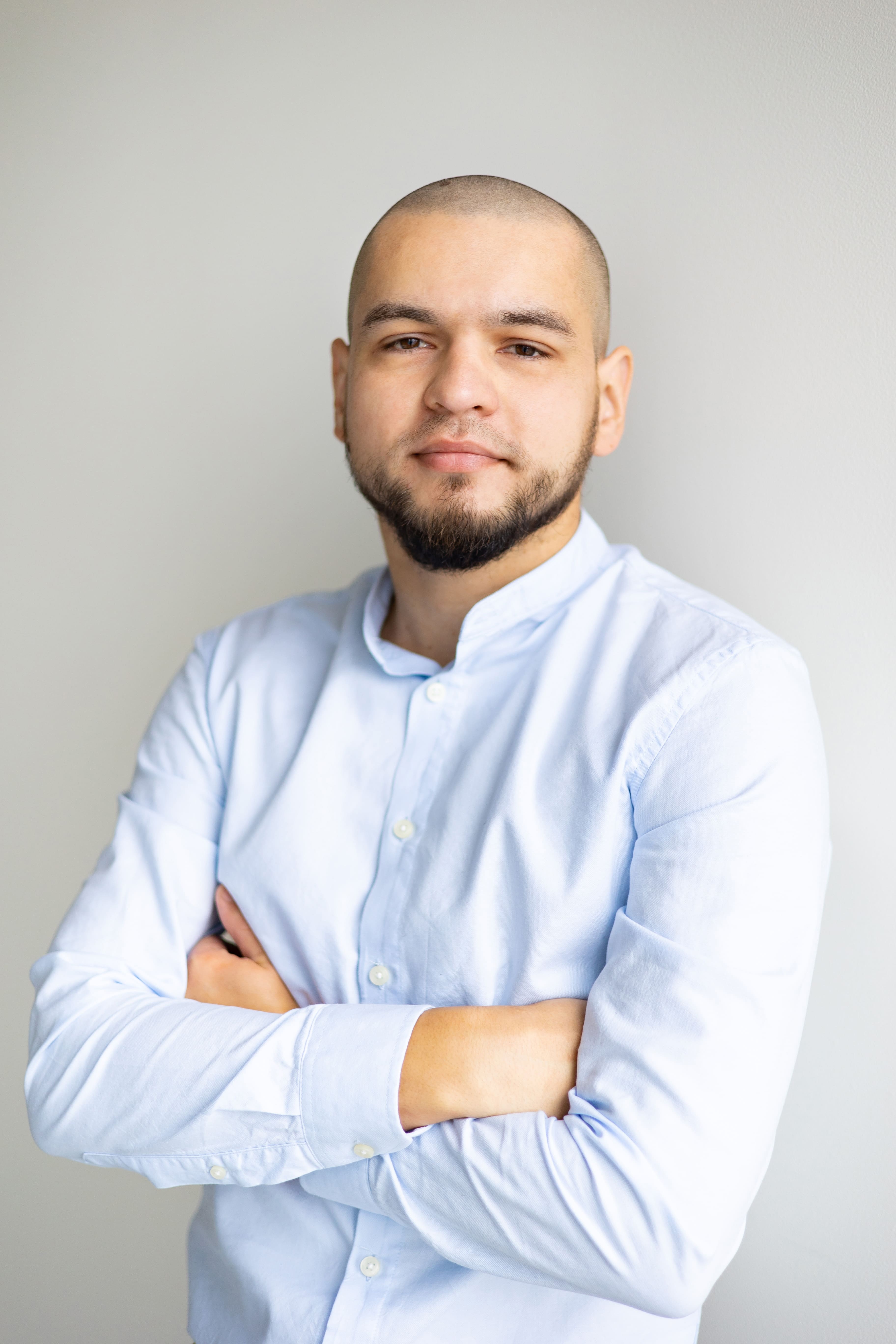
Dmytro Horilyk is a Ukrainian engineer, entrepreneur, and the CEO and co-founder of DrugCard. After spending years in pharmaceutical quality and regulatory compliance, he co-founded DrugCard to automate pharmacovigilance processes using artificial intelligence. Under his leadership, the company expanded into 138 countries, surpassed $1 million in annual recurring revenue (ARR), and became a leading AI-powered pharmacovigilance platform in Europe.
Why This Story Matters
Honesty was never a weakness for DrugCard. It was the foundation upon which the company learned, earned customer trust and expanded beyond its founders.
Story Overview
A pharmaceutical engineer’s journey from asking basic questions in customer offices to building an AI-powered drug-safety company serving 138 countries.
Dmytro did not build DrugCard because he understood sales from the beginning. He built it by listening closely to customers, admitting what he did not know and learning the commercial skills required to turn a technical solution into a $1 million global business.
Continue Reading
The Full Story
The Engineer Who Learned to Sell: How Dmytro Horilyk Built DrugCard Into a $1 Million Global Business
Dmytro Horilyk did not begin his career in sales or attend business school. He began as an engineer inside the pharmaceutical industry, and turned an overlooked compliance burden into an international drug-safety company operating across 138 countries.
There was nothing glamorous about the problem that eventually became DrugCard.
Every week, pharmaceutical companies are required to examine medical literature in every country where their medicines are sold. Their safety teams search through journals, articles and other publications for information that could reveal an adverse reaction or previously unidentified risk.
For a company operating across several markets, that can mean manually reviewing thousands of pages every week. The work is repetitive and time-consuming, but it cannot simply be ignored. Missing one important piece of information could have consequences for regulatory compliance and, more importantly, patient safety.
By 2019, Artem Horilyk had spent approximately seven years working in the pharmaceutical industry, including responsibility for regulatory compliance at one of Ukraine’s largest pharmaceutical manufacturers. He had experienced the problem directly and kept returning to one question:
Why was such an important process still being performed largely by hand?
He began discussing the problem with his brother, Dmytro Horilyk. Together with their close friend, software engineer Myroslav Demchun, they started exploring whether code could take over much of the repetitive work.
That conversation became DrugCard.
But while the idea came from a problem the founders understood intimately, turning it into a viable international business would require Dmytro to become something he had never expected to be: a salesperson.
An Engineer, Not a Salesman
Before DrugCard, Dmytro’s professional world revolved around pharmaceutical manufacturing and quality.
At Arterium, he worked first as a process engineer, developing technical documentation and supervising standard operating procedures. He later became a lead quality engineer, concentrating on data integrity implementation and computerised system validation.
The experience gave him a close understanding of how pharmaceutical companies operate behind the scenes. He understood quality systems, documentation, internal processes and regulatory compliance.
What he did not understand was how to build a company.
Dmytro was not a business school graduate, career marketer or natural salesperson. When he became CEO of DrugCard, he had to learn management, hiring, marketing and sales while already carrying the responsibility of keeping a young company alive.
He learned by asking direct questions—and by becoming comfortable with looking inexperienced.
That willingness to admit what he did not know would become one of DrugCard’s earliest advantages.
Building the First Version
Dmytro, Artem and Myroslav had a working minimum viable product by August 2020. DrugCard officially entered the market in the spring of 2021.
The platform was built to help pharmacovigilance professionals—the people responsible for monitoring and evaluating the safety of medicines—reduce the amount of repetitive work involved in medical literature screening.
Rather than having professionals spend hours searching through publications manually, DrugCard could help identify and organise relevant information more efficiently.
The mission was larger than saving time.
Pharmacovigilance teams help ensure that possible risks connected to medicines are detected and properly investigated. Giving those professionals faster and more dependable tools could allow them to concentrate on analysis and decision-making instead of endless searching.
The founders understood the problem. They had built a product capable of addressing it.
Now they had to persuade companies to buy it.
The Humbling Work of Finding Customers
Dmytro’s earliest customer conversations did not resemble polished enterprise sales presentations.
He was not yet a pharmacovigilance expert, and he did not pretend to be one. He went into client offices, asked straightforward questions and openly acknowledged when he did not understand a particular process or term.
It could have undermined his credibility. Instead, it helped build it.
By allowing prospective customers to explain how their pharmacovigilance departments worked, Dmytro gained a clearer understanding of the industry DrugCard wanted to serve. Customers became participants in the company’s product-development process rather than passive recipients of a rehearsed sales pitch.
They were the experts in the room, and Dmytro listened.
The approach gave DrugCard valuable customer insight and established trust more effectively than pretending to possess answers the founders did not yet have.
But trust did not immediately translate into revenue.
Despite the team’s belief in the product, its local market was not converting. None of the founders had meaningful commercial experience, and they had to confront an uncomfortable reality: building a good product and selling one were entirely different disciplines.
Dmytro had to learn how to sell because the company’s survival demanded it.
The Hiring Mistake Many Founders Make
Sales was not DrugCard’s only early challenge.
The founders initially believed that hiring senior, experienced professionals would allow the company to solve difficult problems quickly. In practice, experience alone did not always produce the results they expected.
Some candidates overstated what they could deliver. Others had become accustomed to the infrastructure, teams and budgets of much larger organisations. When they entered a young company where systems were still being built, the mismatch created friction.
The founders learned that an impressive résumé did not automatically translate into success inside a startup.
Sometimes, the better choice was someone capable of learning, adapting and growing with the company—not someone expected to arrive with an instant solution to every problem.
The lesson changed how Dmytro thought about building teams. DrugCard gradually placed greater responsibility in the hands of the people leading marketing, sales, product and development, allowing the company to become less dependent on its founders.
For Dmytro, that became one of the company’s most meaningful achievements.
A business that cannot function without its founders has not yet become an institution. DrugCard was being built to outgrow the people who started it.
Learning to Operate Across Cultures
Starting DrugCard also changed the size of Dmytro’s world.
Before building the company, he had visited only two countries. Since then, work has taken him to approximately 30.
Those experiences taught him that international expansion involved more than translating a website or repeating the same sales strategy in a different location. People communicate, negotiate and make purchasing decisions differently across markets.
Even within Europe, which may appear commercially unified from a distance, cultural differences can meaningfully affect how business is conducted.
DrugCard learned some of those lessons the hard way.
Dmytro came to understand that before attempting to sell in a new country, a founder must study how that market works: how trust is formed, how decisions are made and how business relationships develop.
The lesson became increasingly important as Europe grew to account for most of DrugCard’s revenue.
Books also helped him place those experiences in context. Reid Hoffman’s Blitzscaling, which Dmytro has read several times, helped him understand how a company’s priorities change as it grows. Kiss, Bow, or Shake Hands deepened his appreciation for cross-cultural business communication.
Mentors from accelerator programmes, including connections associated with MIT, helped guide the company during its early years. Petro Chernyshov, who later became an angel investor in DrugCard, remained a valued mentor as the business matured.
Betting on Artificial Intelligence Early
DrugCard’s growth was also driven by its willingness to invest early in artificial intelligence.
The company began conducting serious research into the application of AI to pharmacovigilance data in 2023. By 2024, it had launched its own model for literature categorisation and introduced an AI Case Intake module, which it presented at the DIA conference in Brussels.
The impact was measurable.
A process that previously required approximately 20 minutes could be reduced to around 90 seconds.
That was not AI added for presentation or publicity. It addressed the same problem that had inspired the founders from the beginning: highly trained safety professionals spending too much of their time on repetitive work that software could perform more efficiently.
DrugCard’s product grew beyond literature monitoring to include regulatory intelligence, adverse-event management and AI-assisted tools supporting pharmacovigilance teams.
The company also brought in investors who could provide more than money. Farmak and Think Bigger Capital joined in 2021, followed by New Nordic Ventures and Petro Chernyshov in 2023. Their backing gave DrugCard both capital and greater industry credibility as it expanded across Europe.
Crossing $1 Million
In early 2026, DrugCard crossed $1 million in annual recurring revenue.
The milestone represented more than financial growth. It validated a journey that had begun with three people examining a tedious compliance process and wondering why technology had not already solved it.
By then, DrugCard had grown into a team of 31, covering 138 countries, with approximately three-quarters of its revenue coming from international markets.
Dmytro was proud of the milestone, but he was equally proud that the company had stayed committed to putting people at the centre of the organisation.
Marketing, sales, product and development were increasingly owned by the people responsible for leading those functions. DrugCard was no longer a business in which every important decision had to pass through its founders.
It was becoming a company capable of functioning beyond them.
From Software Platform to European Infrastructure
In April 2026, DrugCard completed its first acquisition, purchasing SIA OOM, a pharmacovigilance agency based in Riga.
The acquisition introduced a new dimension to the company’s growth.
DrugCard was no longer thinking only as a software provider. By combining its technology with established local pharmacovigilance operations, it could move towards becoming an integrated, end-to-end infrastructure provider for pharmaceutical safety across Europe.
Rather than viewing every established agency as a competitor, DrugCard could grow through acquisition, partnership and integration.
SIA OOM gave the company a stronger presence in the Baltic region and became the first step in a broader strategy to acquire local pharmacovigilance agencies across Central and Eastern Europe and the DACH region.
The long-term ambition is to unite local expertise with scalable technology, creating a connected pharmacovigilance network capable of serving pharmaceutical companies across European markets.
The Cost of Building Something That Matters
Despite DrugCard’s success, Dmytro does not present entrepreneurship as a perfectly balanced journey.
Time management remains one of his greatest struggles.
Building a company while being present for his wife, son, parents and friends has not been easy. He does not claim to have discovered a technique that makes every responsibility fit neatly into place.
Instead, he has accepted that certain stages of company building require intense immersion. The hope is that a more sustainable rhythm becomes possible as the company grows more stable and less dependent on its founders.
His proudest personal decision has nothing to do with technology, revenue or international expansion.
It was the decision to have his son.
For Dmytro, family remains more important than any business milestone. That belief makes the tension between company and family more difficult, but it also reminds him why success cannot be measured by revenue alone.
What He Would Tell His Earlier Self
If Dmytro could return to DrugCard’s earliest days, his first instruction to himself would be simple:
Learn how to sell immediately.
Technical founders can easily believe that a valuable product will create its own demand. DrugCard’s journey taught him that commercial capability is not secondary to product development. A company must learn how to communicate its value, understand its customers and earn their trust.
He would also tell himself to study the culture of every market before trying to enter it and to stop assuming that seniority automatically makes someone the right hire.
Most importantly, he would preserve the honesty that shaped DrugCard’s first customer conversations.
A founder does not have to know everything. But the founder must be willing to admit what they do not know, ask the right questions and learn quickly enough to keep the company moving.
DrugCard began with a specific and distinctly unglamorous problem: too many highly skilled people spending too much time manually searching through medical literature.
Today, it is becoming part of the infrastructure through which pharmaceutical companies manage drug safety across international markets.
The transformation did not happen because Dmytro arrived with a complete understanding of entrepreneurship.
It happened because he was willing to become a beginner again.
Read The Full Story
The next section is where the real story opens up.
Enter your name and email to continue reading the full story, including the operating decisions, pivotal moments, and the lessons behind the company.
Story Snapshot
Founder Context
Related Stories
View all stories

Waqar Younis · Ferio Solutions
From Customer Service to CEO: How Waqar Younis Built Ferio Solutions Around Quality, People and Trust
Waqar did not build Ferio Solutions by chasing every opportunity that appeared. He built it by creating dependable systems, investing in people and learning that sustainable growth sometimes requires saying no.

Abdul Sami Janjua · Ferio Solutions
How Abdul Sami Janjua Built Ferio Solutions One Client and One Reputation at a Time
Abdul did not grow Ferio Solutions by competing on cost alone. He built trust through consistent execution, stronger systems and client relationships designed to last beyond a single project.

Thabiso Mntshali · Xperoc
From Setback to Startup: How Thabiso Mntshali Is Building a Safer Marketplace for Human Skills
Thabiso did not build Xperoc because the path was easy. He built it because he saw skilled people being overlooked, clients being exposed to fraud, and an opportunity to make human services safer, visible and accessible.